In October 2025, OiEau signed a partnership agreement with the Nature 2050 Fund (N2050), the Metropolitan City of Cagliari (MCC) and the Coca-Cola Foundation (TCCF) to expand the activities and scope of the Horizon Europe NATALIE project as part of an extension known as NATALIE+.
This expansion of the Horizon Europe NATALIE project will benefit two European regions: the west of the Grand Est region in France and Sardinia in Italy. In practical terms, in Grand Est, the Nature 2050 Fund aims to support between one and three SfN projects that benefit wetlands and watercourses. Support will be both financial, thanks to TCCF’s financial contribution to the NATALIE+ project, and scientific, thanks to the monitoring and evaluation approach driven by the Nature 2050 programme.
Focus on the first project supported in the Grand Est region
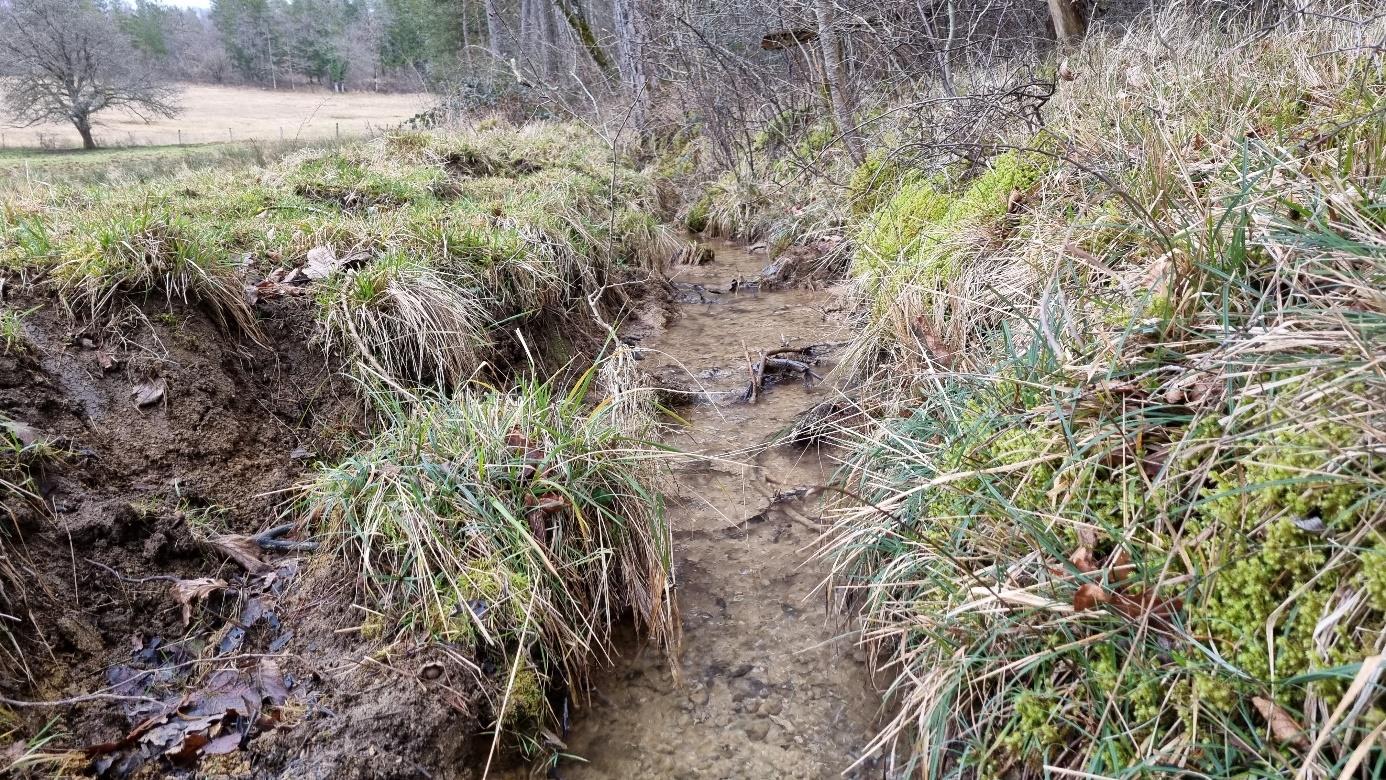
Following several discussions with EPAGE Sequana, a public body responsible for GEMAPI (Management of Aquatic Environments and Flood Prevention), we decided to support the restoration of several tufa marshes located in the Haute-Marne section of the National Forest Park. This project forms part of a collective initiative involving several local stakeholders: the National Forest Park, the CEN Champagne-Ardenne and the ONF. The marshes of the Langres Plateau are areas of significant environmental importance. Generally found in the limestone mountainous regions of the Jura and the Alps, more than two hundred marshes of significant size have been identified within the boundaries of the National Forest Park. However, these habitats have been altered by human activity
over the course of the 20th century, notably through drainage and afforestation. The project therefore aims to restore their natural functioning and strengthen their resilience to the effects of climate change.
An update on the project’s progress
In April 2025, the various project stakeholders (EPAGE Sequana, the National Forest Park, CEN Champagne-Ardenne, ONF, AESN and Nature 2050) met to finalise the project’s funding plan and timetable, and to define the works required for the hydrological restoration of each site. The project is now entering its operational phase. The first softwood logging operations have begun in order to gradually reopen certain areas of the marshes. At the same time, the partners are finalising the administrative procedures required to launch the works. The first restoration works are therefore scheduled for late 2026. Scientific monitoring programmes will also be put in place to assess how the habitats evolve following the works and to draw lessons for future operations.